
What Counts as a Plumbing Emergency (and What Can Wait)
When a plumbing problem hits late at night, the first question is always the same: does this need a plumber right now, or can it wait until morning? Calling out a plumber after hours costs more, so it helps to know which problems genuinely cannot wait and which ones you can safely manage until regular hours. Here is how to tell them apart.
Real emergencies: act now
These problems get worse by the minute and can cause serious damage or a health risk. Treat them as urgent:
- A burst pipe or major leak. Water flooding a room damages structure and belongings fast.
- Sewage backing up into the home through floor drains or toilets, which is both damaging and a health hazard.
- No water at all in the house, especially if a leak or break is the reason.
- A water leak near electrical panels or outlets, which adds a shock and fire risk.
- A gas smell near a water heater or gas appliance. Leave and call your gas utility first, then a professional.
If any of these are happening, it is worth getting a plumber out rather than waiting. Our emergency plumbing page covers the kinds of calls that cannot wait.
What you can usually let wait until morning
Plenty of problems are annoying but not urgent, and handling them in regular hours keeps the cost down:
- A single slow or clogged drain when other fixtures still work.
- A dripping faucet or a running toilet, as long as you can shut it off.
- Low water pressure with no sign of a leak.
- A water heater that is cool but not leaking, in mild weather.
The deciding question is simple. Can you stop the water and is anything being damaged right now? If you can isolate the problem and nothing is getting wrecked, it can usually wait.
What to do before the plumber arrives
A few actions limit the damage in any water emergency:
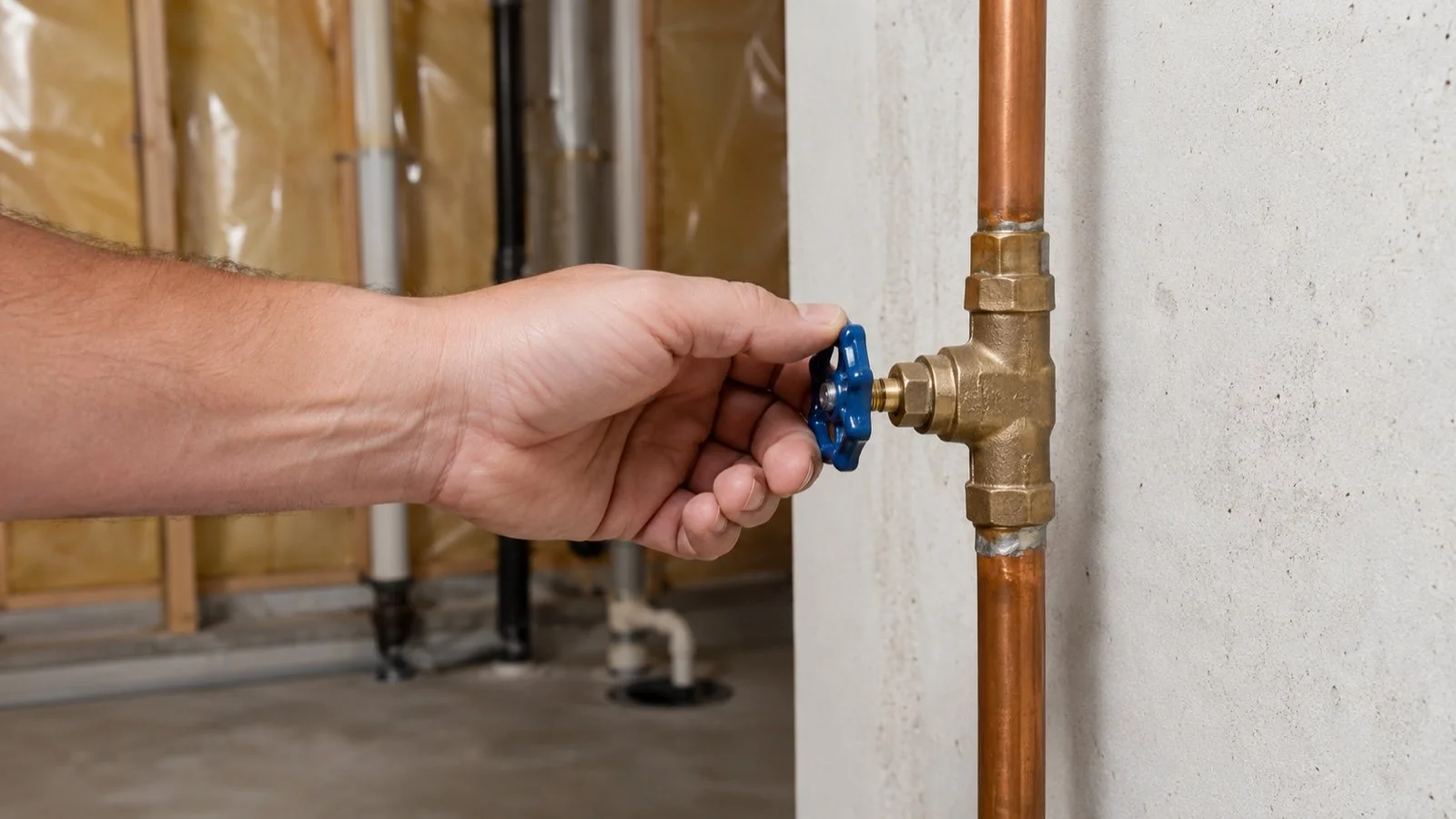
- Find and use your shutoffs. Most fixtures have a local valve. For a major leak, shut off the main valve for the whole house. Knowing where the main shutoff is before you need it is one of the most useful things a homeowner can learn.
- Turn off the water heater if the main supply is off, so it does not run dry.
- Move belongings away from the water and soak up what you can.
- Keep clear of any leak near electrical and shut off that circuit if it is safe to do so.
Prevention beats the 2 a.m. call
Many emergencies start as small problems that were ignored. A drain that keeps backing up, a sump pump making new noises, or a fixture that drips more each month is a warning. Acting on the early signs, with a drain cleaning or a sump pump check, often prevents the after hours crisis entirely.
Frequently asked questions
Is a clogged drain a plumbing emergency?
Usually not, if it is one fixture and others still drain. It becomes urgent when every drain backs up at once or sewage comes up into the home, which points to the main line.
What should I do first in a plumbing emergency?
Stop the water. Use the fixture shutoff if there is one, or the main shutoff for a major leak. Cutting off the supply limits the damage more than anything else you can do while waiting for a plumber.
Is a leaking water heater an emergency?
A heater actively leaking water can be, because it can flood the area and worsen quickly. A heater that is simply not heating, with no leak, can usually wait for regular hours.
Where is my main water shutoff?
It is usually where the water line enters the home, often in the basement near the meter. Find it before an emergency so you can act fast when it counts.
Should I call right away or wait until morning?
If water is flooding in, sewage is backing up, or there is a safety risk, call right away. If you can stop the water and nothing is being damaged, it can usually wait for regular hours and cost less.
Not sure if your problem can wait? If water is flooding in or sewage is backing up, MBM Plumbing handles urgent plumbing calls across Markham and the surrounding area. Stop the water, then reach out.
Request a quote