
Cottage Water Systems: Well Pumps and Pressure Tanks Explained
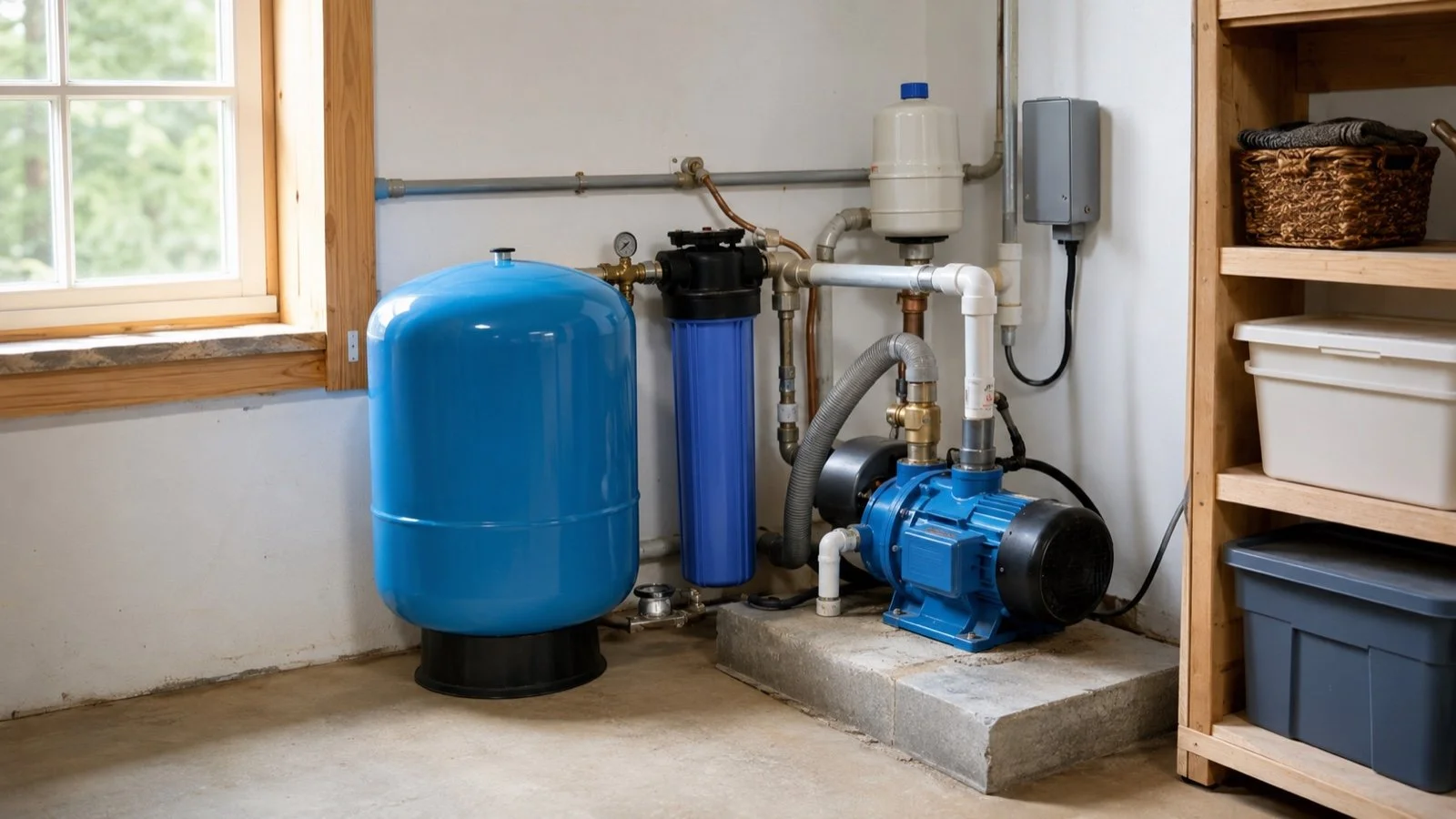
A cottage makes its own water. There is no city main feeding the taps, so the pressure that runs your shower and fills your kettle comes from a well, a pump, and a pressure tank working together. When that system runs well you barely think about it. When it falters you get sputtering taps, weak pressure, or no water at all, often on a long weekend when help is hours away. Understanding how a cottage water system works makes those problems far easier to handle.
How a cottage water system works
Three parts do the work:
- The well is your water source, a drilled or dug source that draws from groundwater or, in some cottages, a lake intake instead.
- The pump moves water from the well into the cottage. Depending on the well it sits down the well as a submersible, or above ground as a jet pump.
- The pressure tank holds a reserve of water under pressure so the pump does not have to run every time you open a tap. It is what gives you steady pressure between pump cycles.
Together they do the job the city does for a home in town: deliver water at a usable pressure. This is the heart of cottage plumbing.
Common cottage water problems
Most cottage water complaints trace back to one of these:
- Sputtering, on and off pressure. Often a waterlogged or failed pressure tank that has lost its air charge, so the pump short cycles.
- Weak pressure throughout. Can be the pump, the pressure switch settings, or a clogged intake or filter.
- No water at all. A pump that has lost prime, a tripped switch, a dropped water level, or a failed pump.
- Air in the lines or cloudy water. Often a sign the water level is low or air is getting into the intake.
Because the symptoms overlap, the fix depends on tracing the real cause across the well, pump, switch, and tank rather than guessing, the same diagnostic approach as a home water pressure problem.
Opening and closing for the season
A cottage water system needs proper handling at each end of the season. Closing up means draining the lines and protecting the system so nothing freezes and bursts over winter, a real risk when a cottage sits unheated for months. Opening up means priming and restarting the system, checking for any winter damage, and confirming the water is running clean before the season starts. Done properly, this seasonal routine prevents the burst pipe that greets you on the first warm weekend.
When water quality is part of the picture
Well and lake water can carry sediment, iron, or other quality issues that town water does not. Filtration and treatment are often part of a cottage system, and a problem there can look like a plumbing problem when it is really a water quality one. It is worth knowing which you are dealing with before chasing a fix.
Why cottage plumbing needs a plumber who will make the trip
The hardest part of cottage water trouble is often just getting someone to come. Many plumbers will not travel out to cottage country, which leaves owners stuck when a pump quits. A burst line or a dead pump at a remote cottage is the kind of problem our emergency plumbing is set up to reach, so a lost weekend does not turn into a lost pipe.
Frequently asked questions
How does a cottage get water pressure without city water?
A well supplies the water, a pump moves it into the cottage, and a pressure tank holds a reserve under pressure so you get steady flow between pump cycles. Together they do what a city main does for a home in town.
Why does my cottage water sputter or cut in and out?
The most common cause is a waterlogged or failed pressure tank that has lost its air charge, which makes the pump cycle on and off rapidly. The pump, switch, and tank all need to be checked to confirm the cause.
Why do I have no water at my cottage?
Possible causes include a pump that has lost prime, a tripped pressure switch, a dropped water level in the well, or a failed pump. Because several things can cause it, the system has to be traced from the well through to the tank.
How do I winterize a cottage water system?
Closing up means draining the lines and protecting the pump and tank so nothing freezes and bursts over winter. It is worth doing thoroughly, since a missed line can split and flood the cottage when it thaws.
Do you travel to cottages for water problems?
Yes. Cottage country plumbing is built around reaching owners who cannot find reliable help nearby, including well pump, pressure, and seasonal work, with travel quoted up front.
Cottage water acting up? MBM Plumbing services wells, pumps, and pressure tanks across cottage country, including seasonal openings and closings, with travel and work quoted before the trip. Based in Markham, serving the wider area.
Request a quote